

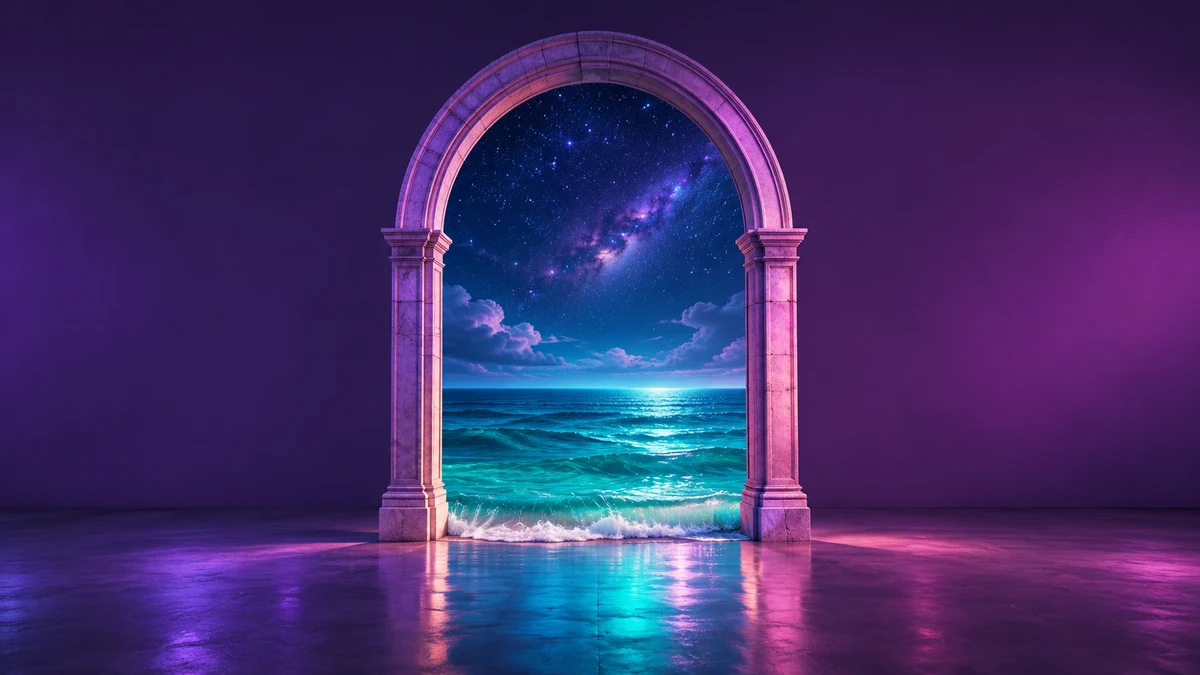
A surreal prompt can produce a busy fantasy picture without communicating the idea you had in mind. These surreal ChatGPT image prompts give each scene one specific contradiction: an ocean below an ordinary floor, clouds hung out like laundry, or a paper bird casting the shadow of an airplane.
Each of the 15 original examples includes the full prompt used, an observation from the actual output and a practical adjustment. Some results only partly follow the material or spatial instructions; those limits are identified beside the image.
Make the impossible detail easy to locate
Use this working structure: ordinary setting → one impossible relationship → a clear boundary → coherent light → a viewpoint that reveals the idea. The boundary is often the difference between a readable scene and a random mixture. An ocean contained below a floor opening is a different instruction from a flooded living room.
For your own concept, write one sentence explaining what is wrong with reality. Then identify what must remain ordinary. If the twist is in a shadow, keep the physical object unchanged; if the twist is behind a doorway, keep the frame and threshold visible.
Use a complete prompt, then inspect the result
- Ask ChatGPT to create an image and paste a full prompt from a card below. These are new-image prompts; they do not require a photo upload.
- Change one subject or setting while keeping the impossible relationship explicit. Replacing a violin with a guitar also means changing the named transformation point.
- Check whether the contradiction is visible without the caption. If you need a long explanation to find it, simplify the composition.
- Inspect ordinary details too: extra legs, accidental objects and broken supports are not automatically part of the surreal concept.
- Use the suggested adjustment only for the failure you see. Avoid adding several new impossibilities to rescue an unclear first idea.
OpenAI’s image instructions describe generating from a written request and adding an aspect ratio. The prompts here request one horizontal 16:9 picture without titles or borders; no special slash code is required by these instructions.
Impossible spaces and unexpected boundaries
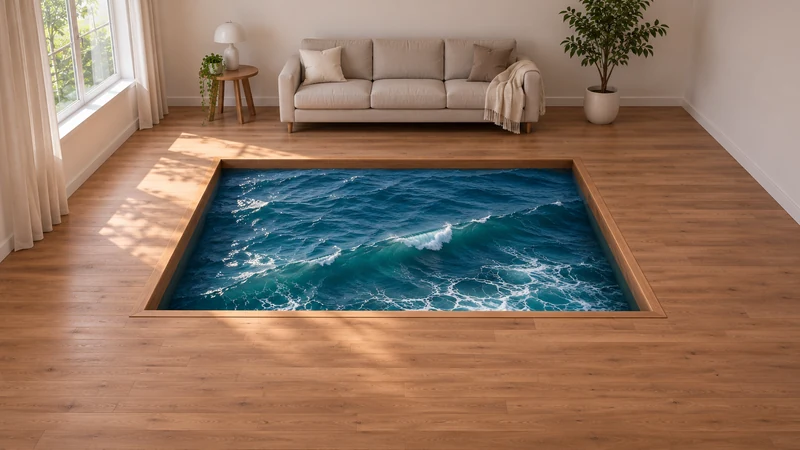
01. An ocean beneath a living-room floor
FULL PROMPT
Create a surreal photographic interior of a quiet modern living room. A clearly bounded rectangular opening in the wooden floor reveals a deep ocean with a small rolling wave below floor level. The sofa, walls and remaining floor stay ordinary, dry and structurally solid. Soft daylight from one window lights the room and the opening consistently. Use an elevated view that makes the ocean boundary obvious. Return one standalone horizontal 16:9 image with high detail. Keep the main objects fully inside the frame, with breathing room at every edge. No headings, lettering, logos, watermarks, decorative frames or collage. Pull the camera back: the entire rectangular floor opening, including all four corners and its nearest edge, must fit within the central 70% of the image width and height. Leave a broad strip of dry wooden floor visible in front of the opening.
What the example shows: The regenerated version shows all four corners of the opening with dry wooden floor around it. The bounded wave is clear, although its rectangular setting can also suggest a pool.
Practical adjustment: If water floods the room, reinforce that the ocean exists only below the rectangular opening and that the surrounding floor stays dry.
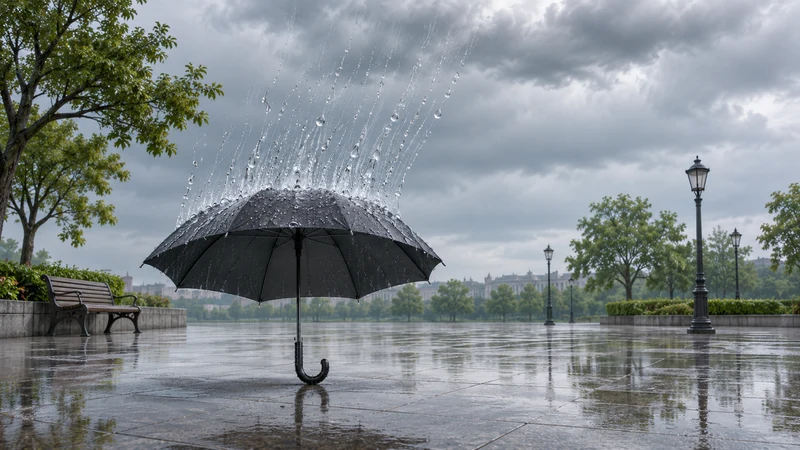
02. Rain falling upward from an umbrella
FULL PROMPT
Create a surreal photographic scene of one open black umbrella resting upright on its handle on a quiet wet plaza. Clear raindrops rise from the umbrella canopy upward toward the clouds instead of falling down. Keep the umbrella structure ordinary and sharply defined; the upward rain is the only impossible event. Use soft overcast daylight, realistic wet reflections and a side view that clearly shows the droplet trails. Return one standalone horizontal 16:9 image with high detail. Keep the main objects fully inside the frame, with breathing room at every edge. No headings, lettering, logos, watermarks, decorative frames or collage.
What the example shows: Upward droplet trails emerge from the canopy. In a still image they can also resemble jets of water; direction is suggested rather than proven by motion.
Practical adjustment: Use a side view and explicitly state the direction of the trails. Still drops alone may not communicate upward movement.
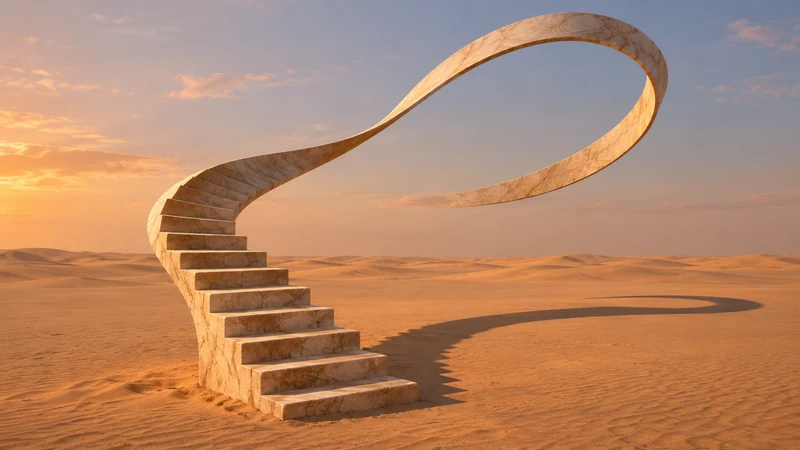
03. A staircase becoming a ribbon
FULL PROMPT
Create a surreal photographic scene in a bare sandy desert. A single freestanding stone staircase rises from the sand, and its upper steps gradually bend into one smooth ribbon of the same stone looping through the air. Keep the lower steps rigid, grounded and recognizable. Use warm late-afternoon light with coherent shadows. Show the entire staircase and stone ribbon with empty desert around them. Return one standalone horizontal 16:9 image with high detail. Keep the main objects fully inside the frame, with breathing room at every edge. No headings, lettering, logos, watermarks, decorative frames or collage.
What the example shows: The lower stone steps stay rigid while the upper part becomes a loop. The detached-looking tapered end reinforces the impossible bend.
Practical adjustment: Keep the lower stairs conventional. If every step melts, limit the bend to the upper third so the original object stays recognizable.
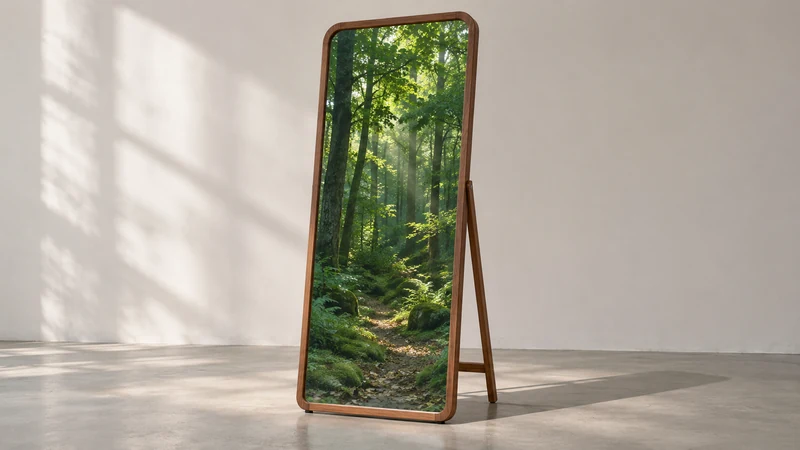
04. A mirror reflecting a forest
FULL PROMPT
Create a surreal photographic still life of a tall freestanding mirror in a plain sunlit studio. The mirror reflects a deep green forest instead of the empty studio, while its frame, base and shadow remain physically ordinary. Make the forest stop precisely at the mirror glass boundary. Show the full mirror with space around the frame, realistic floor contact and soft neutral daylight. Return one standalone horizontal 16:9 image with high detail. Keep the main objects fully inside the frame, with breathing room at every edge. No headings, lettering, logos, watermarks, decorative frames or collage.
What the example shows: The forest stops at the glass boundary while the mirror frame and floor stay ordinary. The depth is also portal-like, illustrating how one prompt can suggest more than one reading.
Practical adjustment: Ask for the impossible scene only within the glass. If trees grow into the studio, reinforce the mirror boundary and keep the surrounding room empty.
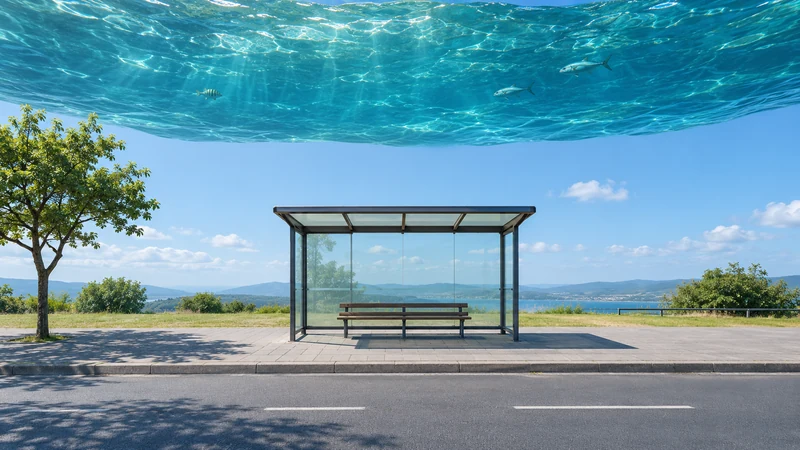
05. A bus stop beneath a suspended sea
FULL PROMPT
Create a surreal photographic street scene with one ordinary empty bus shelter on dry pavement. Above it, a broad flat layer of clear ocean water hangs in the sky like a suspended ceiling, with a few fish visible inside the water. Leave a clear air gap between shelter and sea; the street is not underwater. Use coherent daylight and show the complete shelter with generous surrounding space. Return one standalone horizontal 16:9 image with high detail. Keep the main objects fully inside the frame, with breathing room at every edge. No headings, lettering, logos, watermarks, decorative frames or collage.
What the example shows: The shelter and pavement stay dry with a clear gap below the suspended water. Fish are confined to the upper layer.
Practical adjustment: Specify the air gap and dry pavement. Otherwise the result may become a conventional underwater street rather than a sea suspended overhead.
Objects that break their own rules
These prompts keep enough of the original object to make the transformation recognizable. Pay attention to the point where the ordinary material ends and the impossible behavior begins.
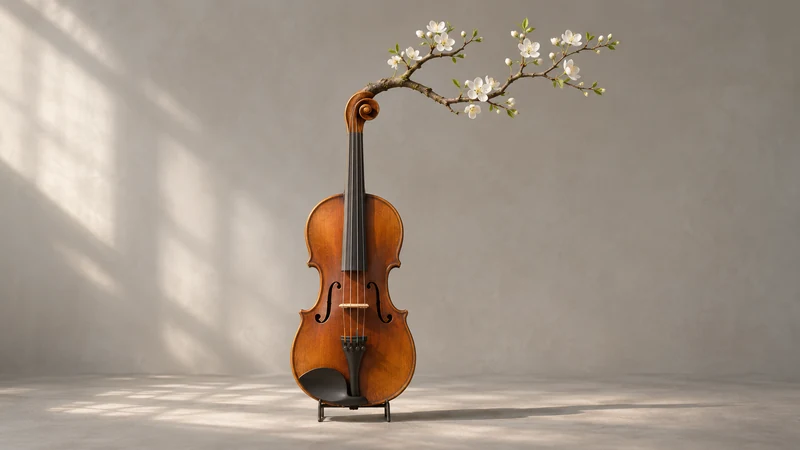
06. A violin growing a flowering branch
FULL PROMPT
Create a surreal photographic product scene of one wooden violin standing on a discreet support in a quiet studio. The scroll at the top of its neck continues naturally into a single living branch with delicate white blossoms. Keep the violin body, strings and bridge recognizable; only the scroll becomes a branch. Use soft directional daylight and show the complete instrument and branch with open margins. Return one standalone horizontal 16:9 image with high detail. Keep the main objects fully inside the frame, with breathing room at every edge. No headings, lettering, logos, watermarks, decorative frames or collage.
What the example shows: The flowering branch starts at the violin scroll, while the body and strings remain recognizable. This is a visual transformation, not a model of a playable instrument.
Practical adjustment: Name the exact transformation point: the scroll. If the whole violin becomes a tree, keep the body explicitly wooden, intact and conventional.
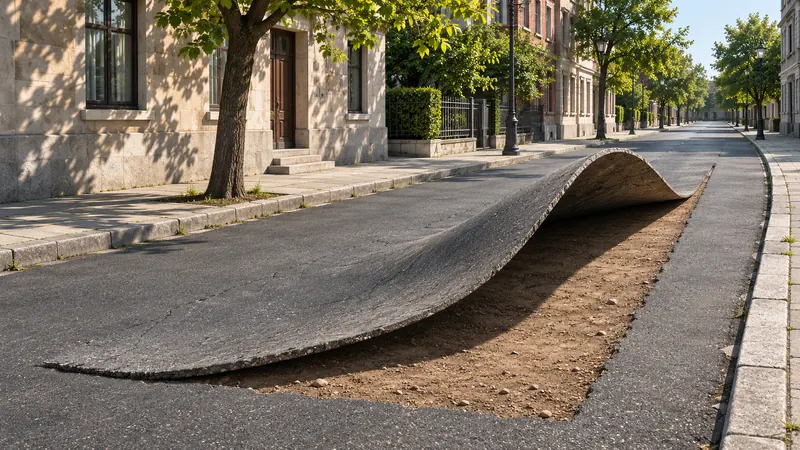
07. A street peeling back like fabric
FULL PROMPT
Create a surreal photographic view down a calm empty street. One central strip of asphalt lifts from the ground and curls upward like a soft sheet of fabric, exposing ordinary compacted earth underneath. Buildings, curbs and the rest of the road remain rigid and normal. Use clear side daylight and a low three-quarter view so the lifted edge and its shadow read clearly. Return one standalone horizontal 16:9 image with high detail. Keep the main objects fully inside the frame, with breathing room at every edge. No headings, lettering, logos, watermarks, decorative frames or collage.
What the example shows: A single strip lifts above the road and exposes the ground underneath. It resembles an asphalt wave more than loose fabric, so the material change is only partly conveyed.
Practical adjustment: Keep the effect confined to one strip. If the buildings bend too, explicitly preserve rigid vertical walls and straight curbs.
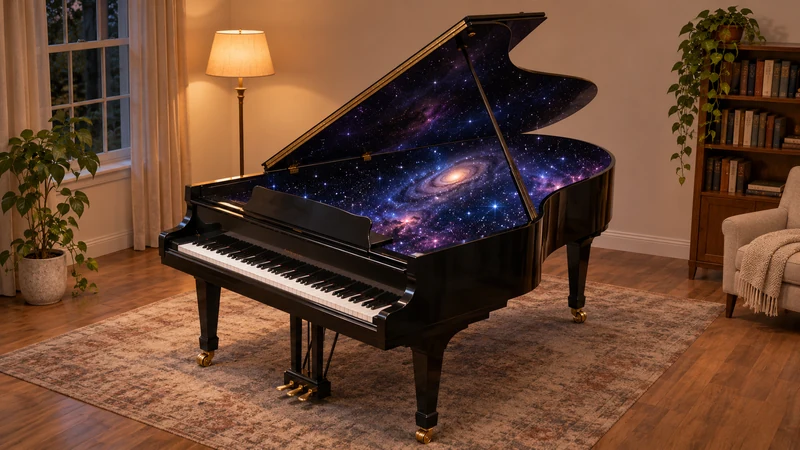
08. A piano opening onto a night sky
FULL PROMPT
Create a surreal photographic scene of a black grand piano in an otherwise ordinary warmly lit room. Its raised lid reveals a deep star-filled night sky contained inside the piano body, where strings would normally be. The outer body, keyboard and legs remain solid and realistic. Use a slightly elevated three-quarter angle to show the cosmic interior, with the full piano and lid inside the frame. Return one standalone horizontal 16:9 image with high detail. Keep the main objects fully inside the frame, with breathing room at every edge. No headings, lettering, logos, watermarks, decorative frames or collage.
What the example shows: The star field fills the piano interior and inner lid while the keyboard and outer body remain recognizable. It may also read as a decorative cosmic lining rather than literal infinite depth.
Practical adjustment: The star field must sit inside the body rather than replace the room. An elevated angle helps the viewer see the boundary.
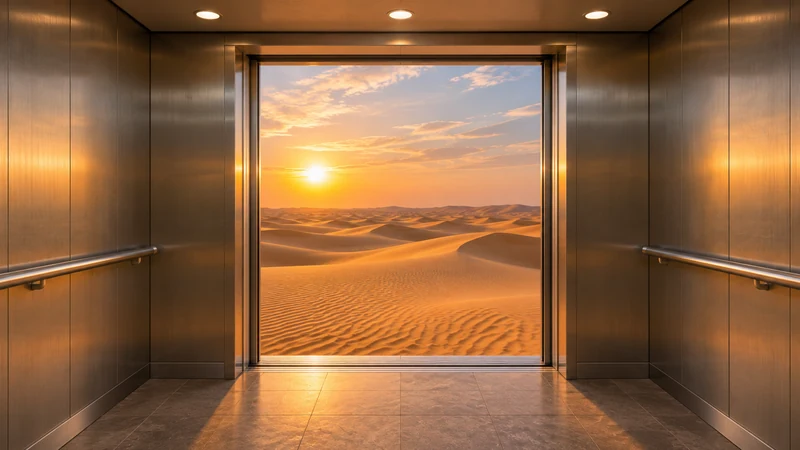
09. An elevator opening into a desert
FULL PROMPT
Create a surreal photographic view from inside a normal empty elevator. Its open metal doors reveal a vast sunlit desert with dunes extending to the horizon, instead of a building corridor. Keep the elevator walls, floor and door frame conventional, with a crisp threshold between the interior and the desert. Match the incoming warm light to the doorway and show the full opening with comfortable margins. Return one standalone horizontal 16:9 image with high detail. Keep the main objects fully inside the frame, with breathing room at every edge. No headings, lettering, logos, watermarks, decorative frames or collage.
What the example shows: The elevator threshold frames the dunes, with warm light reflected on the interior floor. The room remains recognizable as an elevator.
Practical adjustment: Keep the threshold visible. If the scene becomes a desert-shaped poster, ask for real depth beyond an open doorway and light spilling onto the elevator floor.
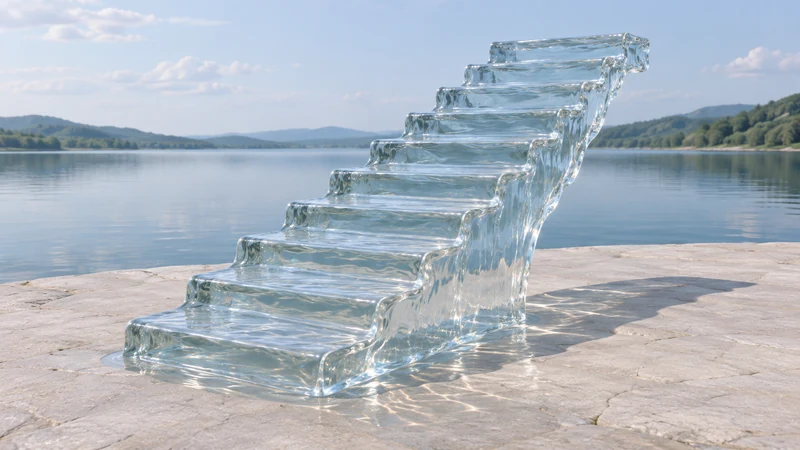
10. A staircase made from standing water
FULL PROMPT
Create a surreal photographic architectural scene of a freestanding staircase made from clear liquid water, with distinct flat treads and rising water edges holding their shape without a container. Place it on plain pale stone beside a calm lake. Show small ripples and liquid refraction rather than glass facets or ice. Use soft daylight and show the entire staircase with generous surrounding space. Return one standalone horizontal 16:9 image with high detail. Keep the main objects fully inside the frame, with breathing room at every edge. No headings, lettering, logos, watermarks, decorative frames or collage.
What the example shows: The stairs show ripples and wavy refraction, but their clean structure still looks somewhat like glass. This is a useful partial result rather than proof of perfect material control.
Practical adjustment: Water must look liquid. If it resembles glass or ice, request surface ripples, fluid edges and a few droplets while retaining distinct steps.
Everyday objects with a second meaning
The last five ideas rely on familiar shapes, a small number of objects and a contradiction that stays visible at a modest image size. Shadows and transparent surfaces can be ambiguous, so compare the output against the intended idea.
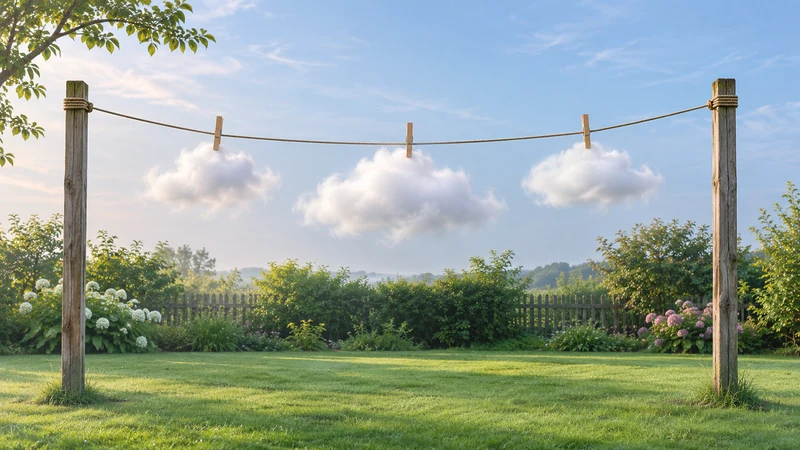
11. Clouds drying on a clothesline
FULL PROMPT
Create a surreal photographic garden scene with three small fluffy white clouds hanging from wooden pegs on an ordinary clothesline between two posts. Keep the grass, posts, pegs and sky realistic; the clouds replace laundry and retain soft vapor edges. Use gentle morning light with restrained shadows and show the entire line, both posts and all three clouds with space around them. Return one standalone horizontal 16:9 image with high detail. Keep the main objects fully inside the frame, with breathing room at every edge. No headings, lettering, logos, watermarks, decorative frames or collage.
What the example shows: Three small clouds hang beneath three pegs. Their irregular edges read as vapor rather than cloth.
Practical adjustment: Keep the clouds attached to visible pegs. If they look like cotton shirts, ask for irregular vapor edges with no woven fabric texture.
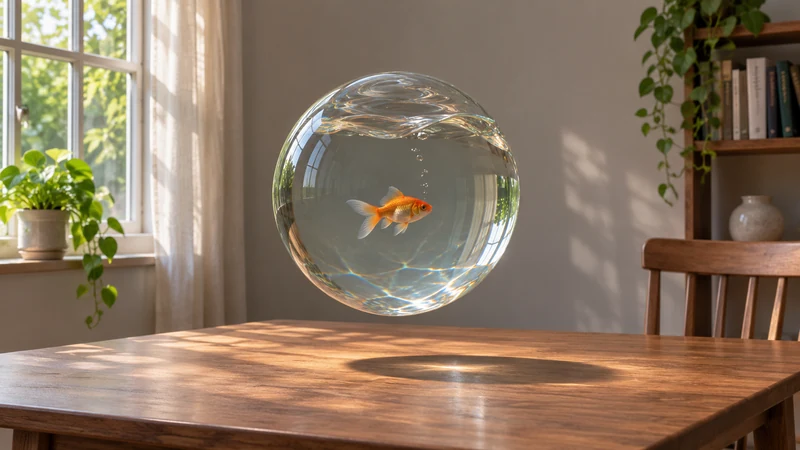
12. A fish inside a floating water sphere
FULL PROMPT
Create a surreal photographic interior showing one small goldfish swimming inside a clear free-floating sphere of water above an ordinary wooden table. The sphere has no glass shell, stand or wires. Keep the fish fully inside the water and the rest of the room dry and conventional. Use side window light, subtle refraction and a contact-free gap above the table; show the complete sphere with generous margins. Return one standalone horizontal 16:9 image with high detail. Keep the main objects fully inside the frame, with breathing room at every edge. No headings, lettering, logos, watermarks, decorative frames or collage.
What the example shows: The water-like sphere floats above the table and the fish stays inside it. The bright curved outline can still suggest a transparent shell despite the prompt excluding glass.
Practical adjustment: Explicitly exclude a glass bowl and visible support. Check that fins remain within the water boundary and that the sphere is separated from the tabletop.
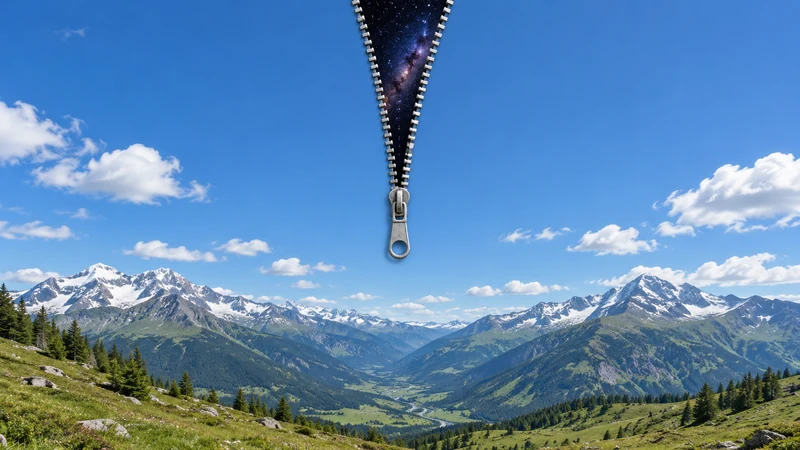
13. A zipper opening the sky
FULL PROMPT
Create a surreal photographic mountain landscape where one enormous ordinary metal zipper runs down a narrow vertical seam in the blue sky. The partly opened seam reveals a dark star field behind the daylight sky. Keep the mountains, clouds and valley natural and unchanged; the zipper and revealed strip are the only impossible elements. Show the full visible zipper pull and a clear seam with open space around them. Return one standalone horizontal 16:9 image with high detail. Keep the main objects fully inside the frame, with breathing room at every edge. No headings, lettering, logos, watermarks, decorative frames or collage.
What the example shows: The zipper opens a narrow star-filled gap while the mountain valley remains in daylight. The upper seam continues out of frame, with the pull fully visible.
Practical adjustment: Keep the night sky inside a narrow opening. If the entire scene turns to night, state that the valley remains in daylight and only the seam reveals stars.
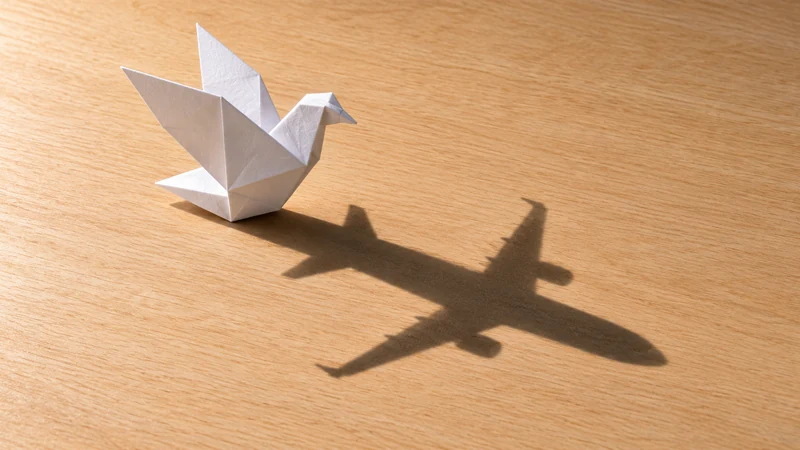
14. A paper bird with an aircraft shadow
FULL PROMPT
Create a surreal photographic still life of a small folded white paper bird resting on a plain sunlit desk. Its single sharp shadow on the desk has the unmistakable silhouette of a passenger airplane rather than a bird. Use one hard light source from upper frame left so there is only one shadow extending to lower frame right. Keep the bird, desk and paper texture ordinary, and show the entire bird and airplane-shaped shadow. Return one standalone horizontal 16:9 image with high detail. Keep the main objects fully inside the frame, with breathing room at every edge. No headings, lettering, logos, watermarks, decorative frames or collage.
What the example shows: The folded bird is intact and its dark shadow reads as an airplane. A single shadow carries the contradiction without a second physical object.
Practical adjustment: The shadow is the transformation. If an airplane appears as a separate object, remove it and specify that only its dark silhouette exists on the desk.
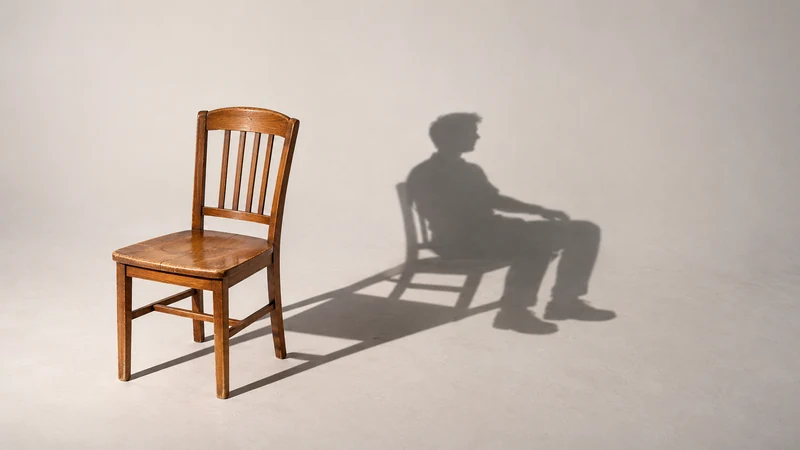
15. An empty chair with an occupied shadow
FULL PROMPT
Create a surreal photographic scene of one visibly empty wooden chair on a pale studio floor. One hard side light casts a single shadow that clearly shows a person seated in the chair, although no person or transparent body is present above the floor. Keep the chair structure ordinary and fully visible. Make the impossible occupied shadow easy to read with generous space around both chair and shadow. Return one standalone horizontal 16:9 image with high detail. Keep the main objects fully inside the frame, with breathing room at every edge. No headings, lettering, logos, watermarks, decorative frames or collage.
What the example shows: The chair seat is visibly empty, while the shadow shows a seated person. The upper shadow falls across the seamless backdrop, so the result does not keep every part strictly on the floor.
Practical adjustment: Keep the seat visibly empty and exclude ghosts or transparent figures. The contradiction should appear only in the shadow.
What our examples reveal about prompt limits
The water staircase has liquid-like ripples, yet its clean structure also resembles glass. The floating fish sphere has no visible support, but its curved highlights can suggest a transparent bowl. The piano contains stars, though it can read as a cosmic lining rather than a doorway into space. These are useful partial interpretations, not evidence that every material or depth instruction was followed.
Choose your next change according to the mismatch. For the stairs, strengthen the liquid cues. For the piano, ask for a visible depth change below the rim. For the fish, simplify reflections that suggest a glass wall. Those are proposed refinements; this article does not present unperformed follow-up generations as successful tests.
Fix the relationship before adding more detail
- The effect spreads everywhere: define where it begins and ends. For example, confine the forest to the mirror glass and keep the studio empty.
- The picture is ordinary: make the contradiction direct. Replace a vague dreamlike room with a room whose dry floor contains a bounded ocean opening.
- The result looks like a montage: ask for one camera viewpoint, matching contact shadows and consistent light across the boundary.
- The main object is cropped: pull the camera back and name the edges that must remain visible. We regenerated the floor-ocean scene for this reason.
- The wrong material appears: add visible evidence of the desired material, such as ripples, vapor edges or folds. A material name alone may still be interpreted loosely.
Turn one idea into a different original scene
Keep the relationship and change its anchor. For the mirror concept, the reusable idea is a familiar boundary showing an unexpected place. You could write a new prompt for a wardrobe opening onto a quiet snowy field. This is an illustrative writing example, not an additional generated image in this collection.
Specify the boundary again after changing the object: the snowy field begins beyond the open wardrobe doors, while the bedroom stays dry and unchanged. Then choose a viewpoint that shows both sides of that threshold. Changing only the noun without checking these relationships can leave the prompt internally inconsistent.
If you need a particular art medium rather than a surreal concept, see our 30 ChatGPT image style prompts. If your aim is believable materials and ordinary photographic detail, see how to make AI images look realistic. For a format change after choosing a result, use the guide to changing aspect ratio without losing the subject.
Using an existing photograph
Upload the original if you want to add an impossible feature to a specific real scene. State the target area and list the elements you want retained. The examples above were generated from text; they do not demonstrate preservation of an existing face, product or room. OpenAI notes that edits may extend beyond a selected area. Check the output against the original and restart from that original when an edit drifts; our ChatGPT image-editing guide explains that limitation.
How these examples were produced
AI Revolution generated the 15 examples individually with ChatGPT image generation on November 26, 2026. No reference photos were uploaded. Fourteen concepts used one generation each. The ocean-below-the-floor concept used two: the first cropped its near edge, so the accepted prompt adds a camera pullback and requires all four corners to remain visible. The cards show the full accepted prompts. A separate generation produced the editorial cover.
Accepted images were visually reviewed and resized to 800 × 450 WebP. No example was extracted from a contact sheet. The exact backend model identifier, seed and per-image cost were not exposed. These are fictional visual examples, not photographs of real events or a benchmark of repeatability. Practical adjustments describe possible next attempts, not results that have already been achieved.
Start with the contradiction you want a viewer to notice. Keep enough of the ordinary world intact that the impossible part has something clear to break.