

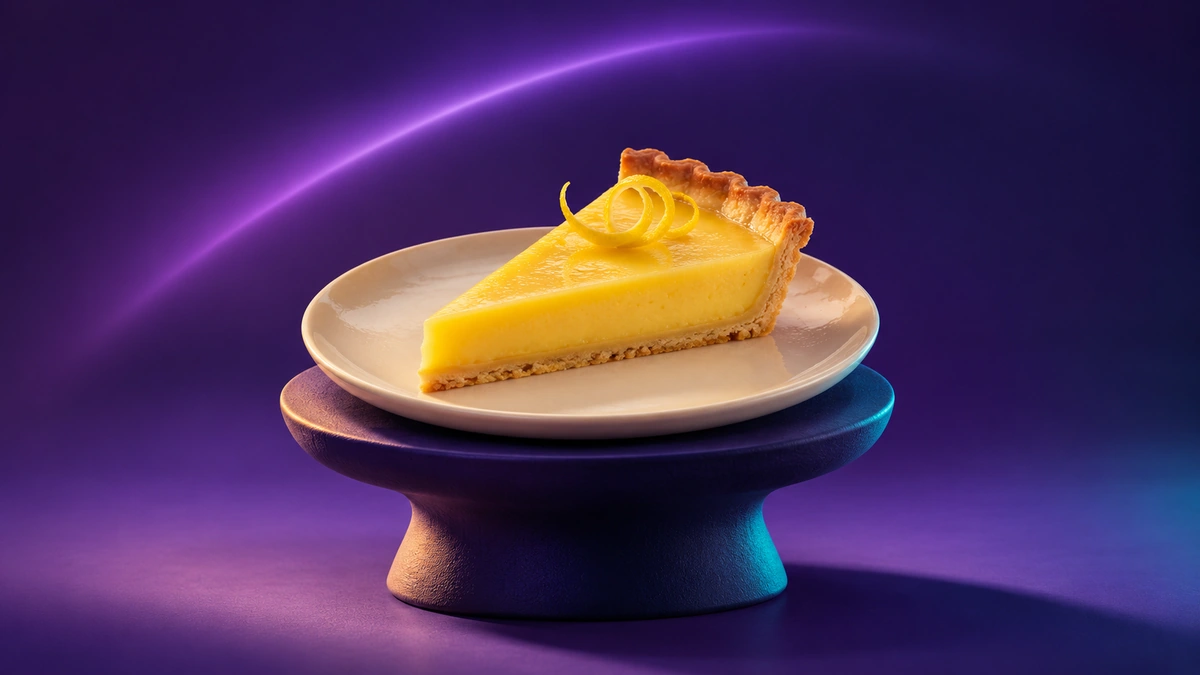
A food prompt becomes easier to judge when the dessert stays recognizable. These eight ChatGPT food photography prompts start with one fictional lemon tart and explore different light, surfaces, camera positions and layouts. Each card includes the exact prompt used, the resulting image and a limitation worth checking.
These are AI-generated food concepts, not photographs of a baked recipe, a real restaurant dish or a tested product. They can help plan a shoot or explore an editorial direction. They do not prove that a recipe produces this appearance.
Start with a dessert you can describe precisely
The first example is the reference image we generated for this article. Its identity is simple: one triangular slice, a thin golden shortcrust base, pale yellow lemon curd, an irregular cut edge and one zest curl. Keeping that description in every prompt gives us concrete details to compare instead of asking whether an image merely looks appetizing.
For examples 2–8, we attached the first image each time and requested a new photographic setup. We did not feed each new result into the next request. That avoids making a chain in which every small change becomes the next reference. It still does not guarantee an identical dessert: crumbs, crust ridges, garnish proportions and plate geometry can be regenerated.
How to use the prompts
- Generate the light editorial reference in card 1, or attach a food photo you have permission to use.
- For the remaining cards, attach that reference and paste the full prompt. Replace the tart description if your subject is different.
- Check the food first, then the plate and props, then the lighting. Attractive color can hide an implausible edge or an altered ingredient.
- Keep the complete food and tableware visible while exploring. Crop later only when the final layout requires it.
The settings below deliberately combine lighting and styling changes to create distinct looks. This is a visual exploration, not a controlled comparison that isolates one photographic variable. For a narrower exercise, use our ChatGPT lighting prompts and keep the surface, props and camera instructions fixed.
Eight food photography looks
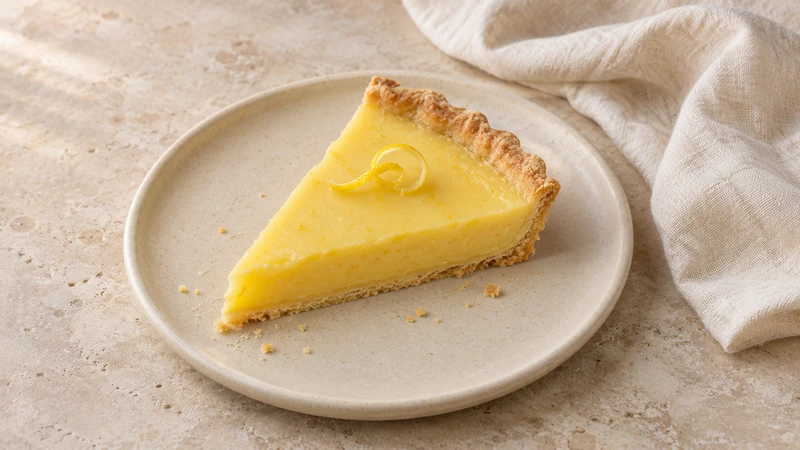
1. Light editorial
Observed result: The softly lit curd has a gentle sheen, an uneven cut and scattered crumbs. The whole plate is visible; the bright stone and linen keep the scene airy.
FULL PROMPT
Create a realistic editorial food photograph of one triangular slice of lemon tart on a plain small cream ceramic plate. The slice has a thin golden shortcrust base, a smooth pale yellow lemon-curd layer, a slightly irregular cut edge and a small lemon zest curl on top. No meringue, berries, extra garnish or writing. The tart slice and complete plate are fully inside the frame with clear margins. Place the plate on a light limestone surface with a loosely folded ivory linen napkin nearby. Soft diffused window light from the left, gentle shadows, natural pastry crumbs, restrained cream and yellow palette. Three-quarter tabletop view, horizontal 16:9. Sharp believable crumb and curd texture, no plastic gloss, no hands, no people, no logos, no watermark or decorative frame. This is an original AI food concept, not a photo of a real restaurant dish.
Practical tip: Begin with soft light and few props so the pastry texture is easy to judge.
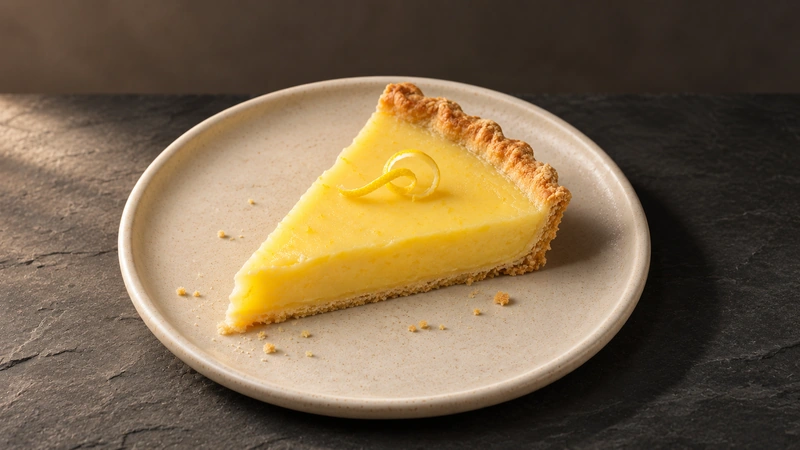
2. Dark and moody
Observed result: The background and table become much darker while the tart remains warm and readable. This is a change of lighting and styling together, not a measured lighting-only experiment.
FULL PROMPT
Use the attached lemon-tart image as the dessert reference. Create one new realistic food-photography concept of the same triangular tart slice: thin golden shortcrust base, pale yellow lemon-curd layer, slightly irregular cut edge, one small lemon zest curl and no additional toppings. Preserve the dessert's recognizable structure and proportions as closely as possible, while allowing the requested photographic setup to change. No hands, people, brand labels, text, watermark or decorative frame. Horizontal 16:9. Keep the entire tart slice and plate inside the image with clear margins. Natural edible texture, not wax or plastic. Set the cream plate on a charcoal slate surface against a dark warm-grey background. Use a soft directional side light from the left, with controlled shadow falloff and a small warm highlight on the curd. No theatrical smoke or steam.
Practical tip: Keep enough detail in the crust shadows; dark does not mean underexposed.
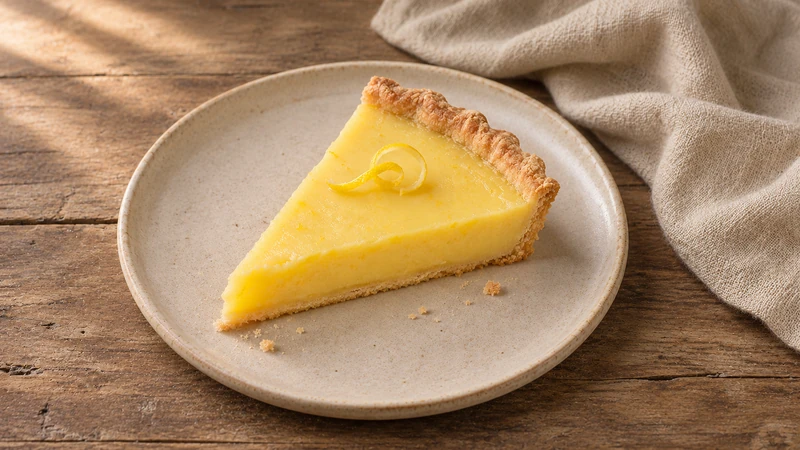
3. Rustic linen and wood
Observed result: The weathered wood and loosely folded linen give the dessert a home-baking context. The crumb pattern and crust ridges differ from the reference.
FULL PROMPT
Use the attached lemon-tart image as the dessert reference. Create one new realistic food-photography concept of the same triangular tart slice: thin golden shortcrust base, pale yellow lemon-curd layer, slightly irregular cut edge, one small lemon zest curl and no additional toppings. Preserve the dessert's recognizable structure and proportions as closely as possible, while allowing the requested photographic setup to change. No hands, people, brand labels, text, watermark or decorative frame. Horizontal 16:9. Keep the entire tart slice and plate inside the image with clear margins. Natural edible texture, not wax or plastic. Use a weathered medium-brown wooden tabletop and a loosely folded natural linen cloth. Add only a few believable pastry crumbs beside the plate. Gentle window light and warm restrained color, three-quarter view. No extra food.
Practical tip: Use a few crumbs as texture cues, not a trail that obscures the plate.
4. Minimal studio
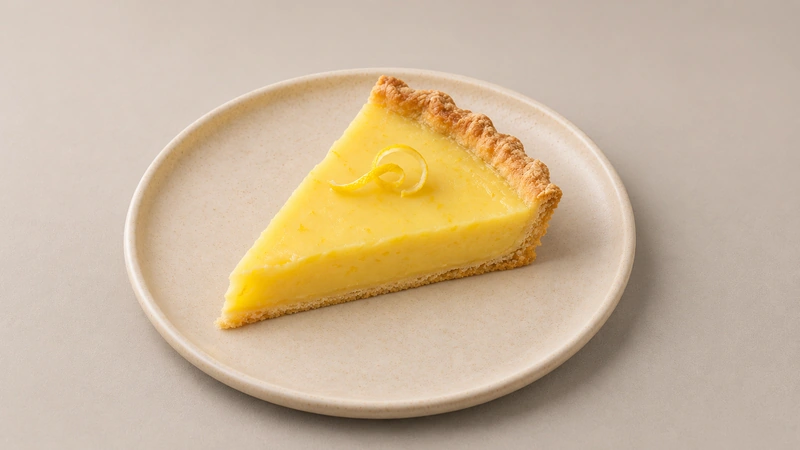
Observed result: The props disappear and the plate sits on a quiet neutral surface. The restrained contact shadow keeps it grounded, although the curd still looks unusually tidy.
FULL PROMPT
Use the attached lemon-tart image as the dessert reference. Create one new realistic food-photography concept of the same triangular tart slice: thin golden shortcrust base, pale yellow lemon-curd layer, slightly irregular cut edge, one small lemon zest curl and no additional toppings. Preserve the dessert's recognizable structure and proportions as closely as possible, while allowing the requested photographic setup to change. No hands, people, brand labels, text, watermark or decorative frame. Horizontal 16:9. Keep the entire tart slice and plate inside the image with clear margins. Natural edible texture, not wax or plastic. Place the cream plate on a clean warm-grey matte studio surface with an uncluttered pale background. No napkin, utensils, crumbs or additional objects. Soft broad studio light, a small natural contact shadow under the plate, deliberately restrained styling.
Practical tip: Remove props explicitly when you want the dessert's outline to carry the composition.
5. Close texture study
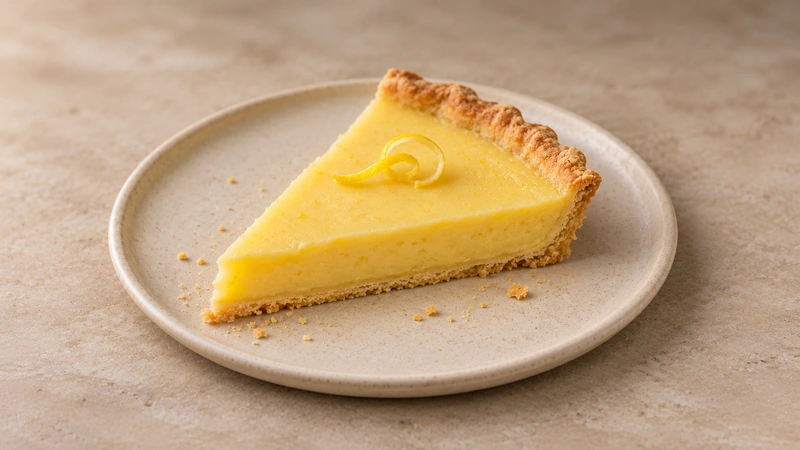
Observed result: The first attempt clipped the plate. The revised prompt pulls back and shows the full rim while retaining visible curd and crust detail; it is a texture-focused view rather than a true macro crop.
FULL PROMPT
Use the attached lemon-tart image as the dessert reference. Create one new realistic food-photography concept of the same triangular tart slice: thin golden shortcrust base, pale yellow lemon-curd layer, slightly irregular cut edge, one small lemon zest curl and no additional toppings. Preserve the dessert's recognizable structure and proportions as closely as possible, while allowing the requested photographic setup to change. No hands, people, brand labels, text, watermark or decorative frame. Horizontal 16:9. Keep the entire tart slice and plate inside the image with clear margins. Natural edible texture, not wax or plastic. Use a close low three-quarter view that makes the cut crust and curd layer prominent. Move close enough to show fine crumb and a slightly imperfect cut, while still including the entire slice and complete small plate. The backdrop is simple and gently out of focus. No exaggerated wet sheen. Keep at least ten percent of the image height as empty tabletop below the bottom of the plate, and ten percent above its top. The complete circular plate rim must be visible on every side. Pull the camera back enough to achieve this; showing the whole plate takes priority over magnification.
Practical tip: A close view should reveal texture without inventing layers or making the curd look like plastic.
6. Overhead flat lay
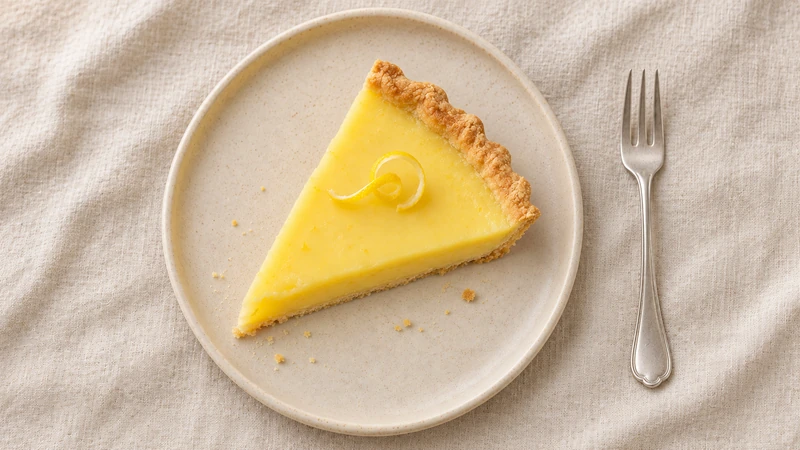
Observed result: The camera moves overhead and a separate four-tined fork appears. The plate becomes more oval than in the reference, so this result is useful for layout exploration but fails exact tableware preservation.
FULL PROMPT
Use the attached lemon-tart image as the dessert reference. Create one new realistic food-photography concept of the same triangular tart slice: thin golden shortcrust base, pale yellow lemon-curd layer, slightly irregular cut edge, one small lemon zest curl and no additional toppings. Preserve the dessert's recognizable structure and proportions as closely as possible, while allowing the requested photographic setup to change. No hands, people, brand labels, text, watermark or decorative frame. Horizontal 16:9. Keep the entire tart slice and plate inside the image with clear margins. Natural edible texture, not wax or plastic. Move the camera directly above the cream plate, looking straight down. Place it on light linen with one small plain silver dessert fork beside the plate, completely visible and separate from the dessert. Show the triangular top shape, subtle zest curl and gentle even window light.
Practical tip: Overhead emphasizes the top shape, so it is less useful for showing the crust layer.
7. Quiet cafe table
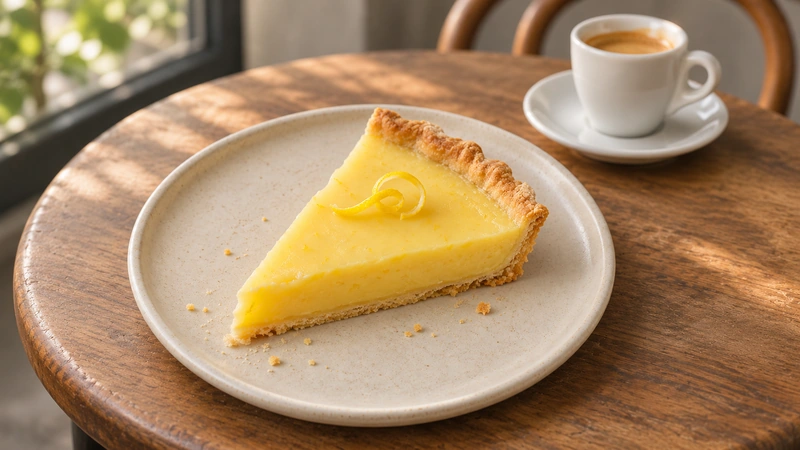
Observed result: The tart sits on a round wooden cafe table with a distinct cup and saucer behind it. The coffee is secondary and the cup handle remains legible; this is an invented cafe scene.
FULL PROMPT
Use the attached lemon-tart image as the dessert reference. Create one new realistic food-photography concept of the same triangular tart slice: thin golden shortcrust base, pale yellow lemon-curd layer, slightly irregular cut edge, one small lemon zest curl and no additional toppings. Preserve the dessert's recognizable structure and proportions as closely as possible, while allowing the requested photographic setup to change. No hands, people, brand labels, text, watermark or decorative frame. Horizontal 16:9. Keep the entire tart slice and plate inside the image with clear margins. Natural edible texture, not wax or plastic. Place the plate on a small round wooden cafe table, with one plain white espresso cup and saucer in the background. No other food, no people, no menus or signage. Soft natural morning light, three-quarter tabletop view, dessert sharp and background gently softened.
Practical tip: Keep the background cup secondary and avoid pretending this depicts an actual cafe serving.
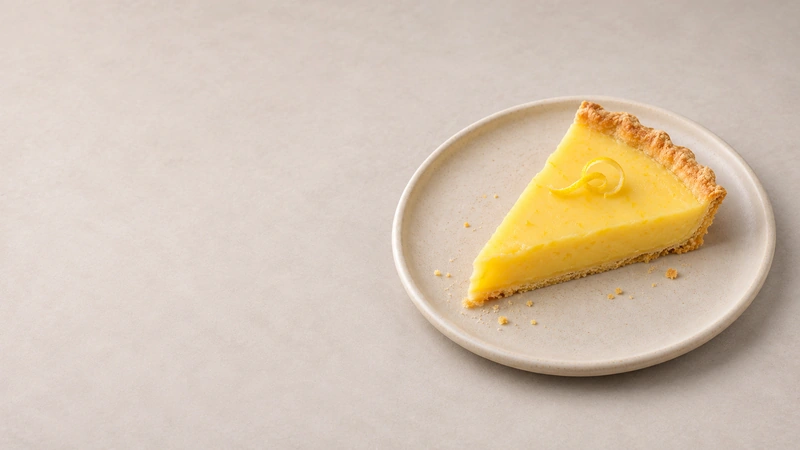
8. Space for a headline
Observed result: The dessert and plate move to the right, leaving a broad quiet area on the left. The free area is useful for adding your own text later; the generated image contains no headline.
FULL PROMPT
Use the attached lemon-tart image as the dessert reference. Create one new realistic food-photography concept of the same triangular tart slice: thin golden shortcrust base, pale yellow lemon-curd layer, slightly irregular cut edge, one small lemon zest curl and no additional toppings. Preserve the dessert's recognizable structure and proportions as closely as possible, while allowing the requested photographic setup to change. No hands, people, brand labels, text, watermark or decorative frame. Horizontal 16:9. Keep the entire tart slice and plate inside the image with clear margins. Natural edible texture, not wax or plastic. Create a restrained editorial banner composition: place the plate with the tart slice in the right third, on a pale warm-grey seamless surface. Leave the entire left half mostly empty and evenly lit, with no props or lettering. Soft natural shadows, wide readable spacing.
Practical tip: Ask for empty space rather than asking the model to invent advertising text.
What to inspect before calling a food image realistic
Curd and crust: the filling should meet the pastry cleanly, with plausible thickness and a cut face that looks edible. Watch for a waxy surface, repeated identical pores or a pastry wall that changes height without explanation. In this set the small irregularities help, but the tidy yellow filling still has a polished AI appearance in several images.
Plate and utensils: trace the rim all the way around. Check that a fork has distinct tines, a cup handle has an open space and a saucer does not melt into the table. Our overhead image changed the apparent plate shape. That is a reason to revise tableware instructions if the real plate matters, even though the composition itself works.
Light and contact: the dessert should sit on the plate, and the plate should sit on the surface. Compare the main highlight with the shadow direction. A tiny highlight on moist curd is plausible; a glowing plastic edge or unrelated pool of light is a warning to inspect more closely.
Props and serving claims: count every added object. Here, one espresso belongs to the cafe concept and one fork belongs to the overhead setup. Neither tells us anything about a real serving size, recipe, taste or menu offering.
Useful corrections when the first result misses
If the food looks plastic, name the material qualities you want: a lightly moist cut face, irregular fine crumbs and restrained highlights. “More realistic” gives less direction. If the garnish multiplies, state its number and remove every other topping from the subject description.
If tableware is clipped, specify the entire rim plus a measurable margin. Our first texture-focused attempt cut off the bottom of the plate. Adding explicit empty space below and above it produced the selected second attempt. The tradeoff is a less extreme close-up, which is preferable when a complete plate is required.
For distorted dishes, try a direct correction such as “Use one circular ceramic plate with an unbroken rim, viewed directly from above; preserve the dessert and do not add props.” This is a suggested follow-up, not an additional tested result in this article. A fresh request may also alter details that already worked.
If the real product must match exactly, compare against the actual photograph rather than approving the result from memory. Our product photo accuracy test covers this distinction, while our guide to making AI images look more realistic explains broader visual checks.
Choose a look for a specific job
The light editorial and rustic versions suit a warm recipe-story concept. The dark version emphasizes the yellow filling. The minimal studio setup reduces distractions; the overhead view makes spacing easier to plan. The cafe version adds a setting, and the final version provides room for a title you add in a design editor. These are creative uses for the concepts, not evidence of a real dish or an endorsement of synthetic menu photography.
When you need a different camera position, describe the camera rather than just rotating the food. See our eight camera angle examples for the same problem with a bicycle scene.
How these examples were made
We generated the images in ChatGPT on 27 November 2026: one original reference, seven reference-based variants and one extra attempt to correct the texture view. That is nine dessert-image generation attempts for eight selected examples. The featured cover was generated separately and is an editorial illustration, not another test result.
We inspected the food texture, complete plate edges, added utensils and scene consistency. The published examples were resized to 800 × 450 and converted to WebP; important content was not cropped during export. No real recipe was cooked, and no taste, nutrition or commercial food-production test was performed. The generation interface did not provide a reliably verifiable exact model identifier or per-image credit cost, so we do not claim either.
For the official image-generation and editing workflow, see OpenAI’s ChatGPT Images help page. The prompts and observed results here are our own examples, and another generation can differ.